Author: admin
-
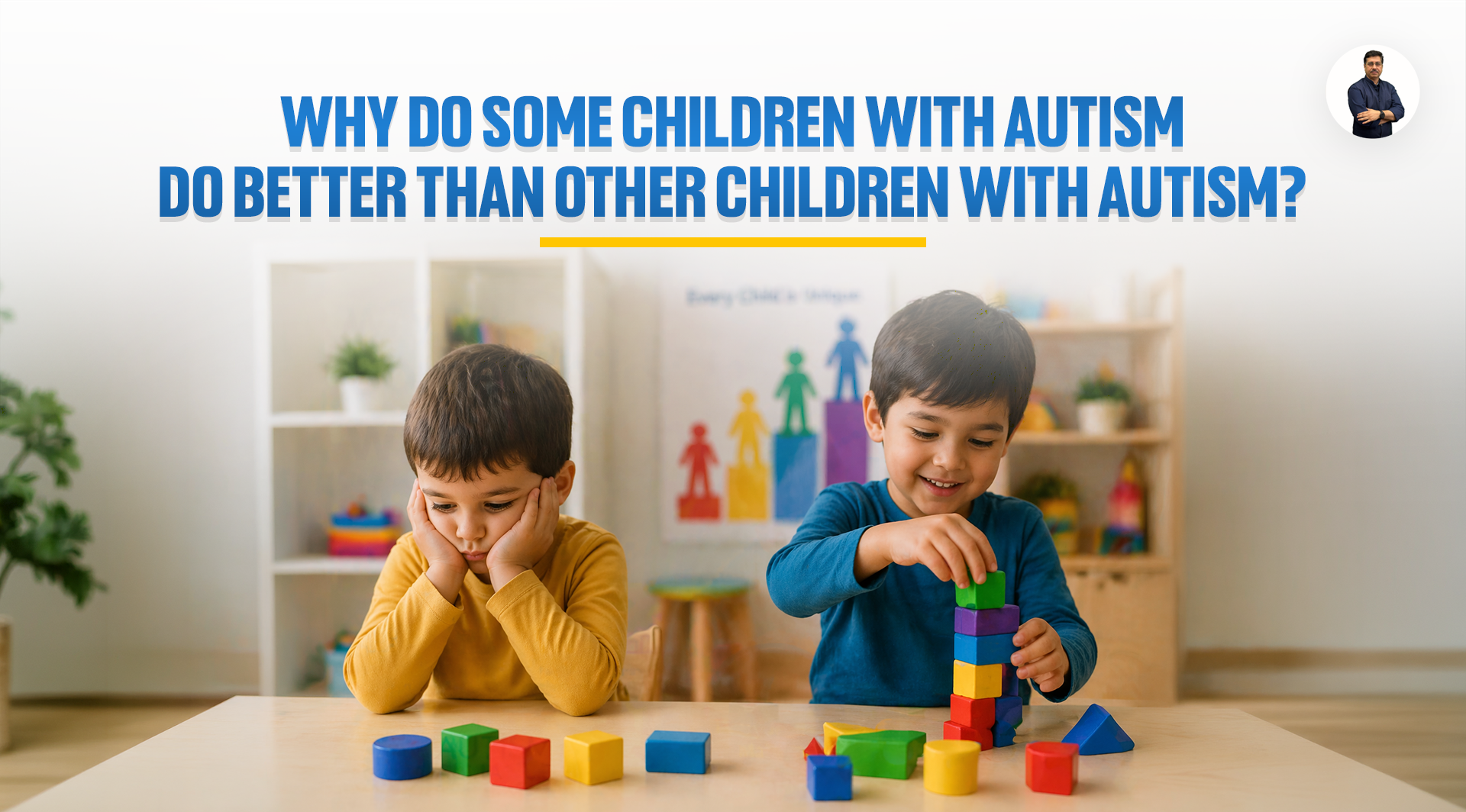
Why Do Some Children with Autism Do Better Than Others?
When we look at children on the autism spectrum, it is common to notice that some seem to progress faster or more visibly than others. This often creates confusion, and sometimes even comparison. But the difference is rarely about the child alone. It is more about the structure, consistency and understanding around the child. Progress…
-

How to Generalize Structured Autism Therapy at Home
Structured therapy plays an important role in supporting children with Autism Spectrum Disorder. However, meaningful progress does not happen only inside the therapy room. For skills to become functional and long lasting, they must be generalized to natural environments, especially the home. What Does “Generalization” Mean? Generalization means that a child is able to use…
-

ल्यूकोवोरिन (Leucovorin) और ऑटिज़्म (Autism): माता-पिता के लिए एक आसान और सही जानकारी
अक्सर माता-पिता इंटरनेट पर ल्यूकोवोरिन, फोलेट की कमी या ‘FRAT टेस्ट’ के बारे में पढ़ते समय उलझन में पड़ जाते हैं। यह लेख रिसर्च पर आधारित है ताकि आपको सरल शब्दों में सही जानकारी मिल सके। कृपया ध्यान दें कि यह डॉक्टर की सलाह नहीं है; इलाज से जुड़ा कोई भी फैसला विशेषज्ञ डॉक्टर की…
-

Understanding Therapy Progress: A Structured Review Approach for Parents
When parents begin therapy for their child, the journey often starts with optimism and strong motivation. Over time, however, uncertainty may arise, especially when progress does not appear immediately or in obvious ways. This experience is common and does not indicate that therapy is ineffective. To support families and maintain clarity, it is helpful to…
-

Leucovorin and Autism: A Clear, Evidence-Based Guide for Parents
Parents searching online for leucovorin, folate deficiency, or the FRAT test in autism often encounter confusing or conflicting information. This article is written to clearly explain the medical reasoning, outline who leucovorin may help, and just as importantly, who it may not help. This is not medical advice. It is educational information based on published research. Any treatment decision should always be…
-

छोटे छोटे माइलस्टोन मनाइए: अपने बच्चे की ऑटिज़्म यात्रा में हिम्मत कैसे बनाए रखें
ऑटिज़्म (ASD) में बच्चे की प्रगति अक्सर धीरे और छोटे-छोटे कदमों में होती है। सिर्फ बड़े milestones पर ध्यान देने से parents जल्दी थक जाते हैं और निराश हो जाते हैं। इसलिए छोटे wins को पहचानना और celebrate करना जरूरी है, जैसे थोड़ी देर eye contact करना, किसी action को copy करना, नया sound निकालना,…
-

Understanding the ABC Model in Behaviour Therapy for Autism
The ABC (Antecedent–Behaviour–Consequence) model is a structured, evidence-based framework used to understand why behaviours occur and how to respond more effectively. This article explains how parents and professionals can apply the ABC model in daily life to observe patterns, reduce challenging behaviours, and support children with Autism in a consistent, realistic way.
-

Celebrating Small Milestones: Staying Encouraged on Your Child’s Autism Journey
Understanding the Emotional Journey Parenting a child with Autism Spectrum Disorder (ASD) is a deeply personal and evolving experience. It comes with moments of joy, hope, patience, and at times, fatigue and uncertainty. Managing therapies, routines, and expectations can be emotionally demanding. In this process, many parents focus mainly on “big outcomes,” such as when…
-

Fixation or Repetitive Behaviour in Autism
Understanding Fixation and Repetition Children with Autism often show repetitive or fixed behaviors such as spinning objects, watching wheels rotate, clapping hands repeatedly, or holding the same item for long periods. These behaviors are called stereotypical behaviors or self-stimulatory behaviors, commonly referred to as stimming. Such actions may seem unusual to others but for the…
-

Importance of Integrated Therapy in Autism
Understanding the Need for Integration Autism Spectrum Disorder (ASD) is a neurodevelopmental condition that affects communication, social interaction, sensory processing, and behavior regulation. Since these developmental areas are interlinked, focusing on one aspect of therapy in isolation often results in limited improvement. For example, a child may develop speech but still struggle to use it…